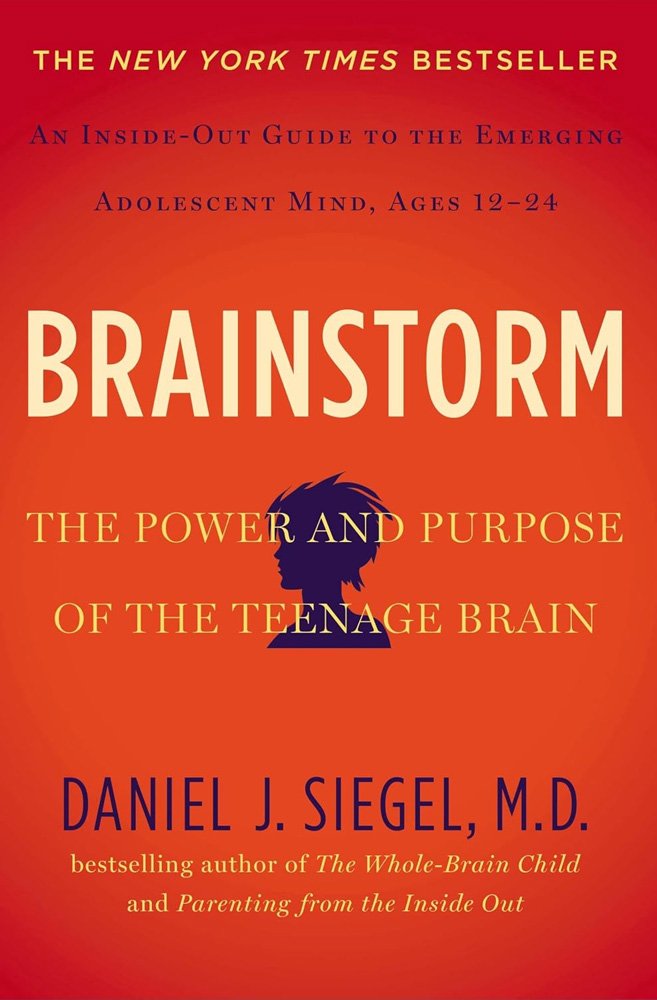
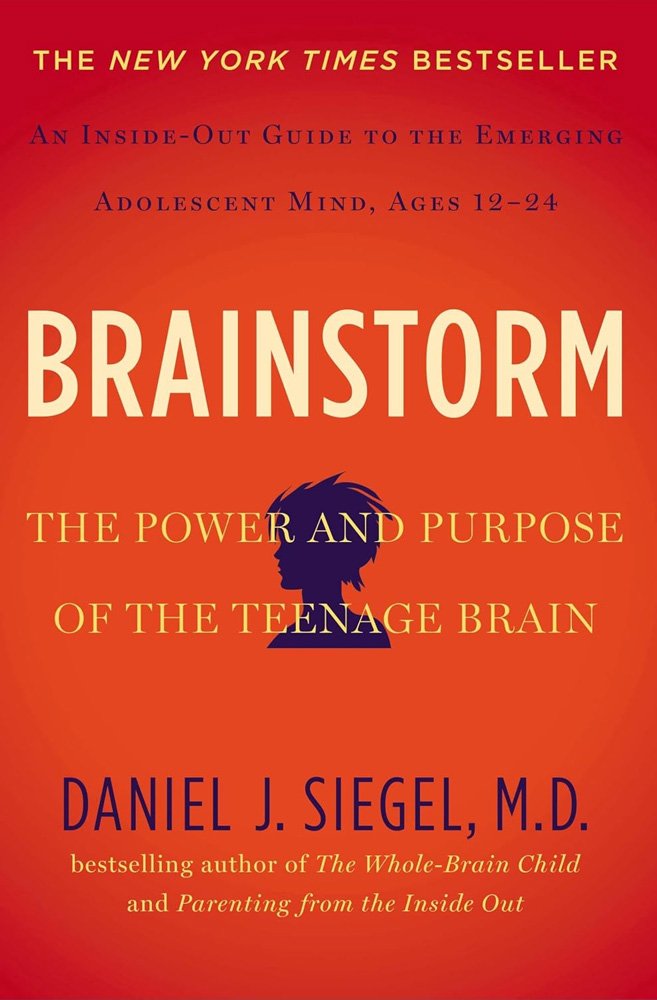
Brainstorm: The power and purpose of the teenage brain
by Daniel J. Siegel, M.D.
About the Author
Daniel J. Siegel, M.D., is a professor of psychiatry at the UCLA School of Medicine and the founder of the Mindsight Institute. His work brings together neuroscience, psychology, attachment theory, and mindfulness to explain how people develop and build relationships. He has written books for parents, educators, counselors, and the general public.
What Is This Book About?
Brainstorm explores the teenage brain and the opportunities and challenges of adolescence. Siegel argues that adolescence is not simply a developmental problem to survive. It is a time of emotional intensity, social connection, interest in new experiences, and creative exploration. These qualities can support growth throughout adulthood.
The book combines brain science, personal stories, attachment theory, and practical exercises. It explores how brain development affects behavior and relationships, and how self-awareness, empathy, and healthy relationships can support development.
Who Might Benefit?
his book may be useful for teenagers, parents, educators, counselors, and others who work with adolescents. It may help teenagers better understand their own development and help adults respond to young people with greater understanding.
The book also includes practical exercises that can be used to develop self-awareness, emotional regulation, empathy, and healthier relationships.
Key Ideas to Explore
- The ESSENCE of adolescence: Siegel describes four important qualities of adolescence: Emotional Spark, Social Engagement, Novelty, and Creative Exploration. These qualities help explain both the strengths and challenges of the teenage years, and he argues that they remain valuable throughout adulthood.
- Mindsight and the “sea inside”: Mindsight means learning to recognize our own inner experiences and understand the experiences of others. Siegel uses the “sea inside” as a metaphor for our changing inner world, including sensations, images, feelings, thoughts, memories, and desires.
- SIFT: This exercise helps people notice four parts of their inner experience: Sensations, Images, Feelings, and Thoughts. It offers a practical way to build self-awareness and better understand what is happening internally.
- The Wheel of Awareness: This exercise helps people direct their attention toward different parts of their experience. Siegel presents it as another way to develop mindsight and greater awareness.
- Integration: Healthy development involves connecting different parts into a more coordinated whole. This applies both within ourselves and in our relationships with others. When integration is impaired, people may experience chaos, or feeling overwhelmed and out of control, or rigidity, or becoming overly fixed and unable to adapt.
- Brain development and behavior: Siegel discusses dopamine, reward sensitivity, brain remodeling, pruning, myelination, executive functioning, and gist thinking. These concepts help explain changes in adolescent behavior, judgment, emotional regulation, and decision-making.
- Attachment and relationships: Early attachment relationships influence emotional development, but development continues throughout life. Reflection, healthy relationships, and repairing relationship difficulties can help people develop greater security and connection.
- Empathy and attunement: Siegel suggests watching television with subtitles and imagining what characters may be thinking or feeling based on their tone of voice, facial expressions, and body language. The goal is not necessarily to guess correctly, but to practice trying to understand another person’s inner experience.
- COAL: Curiosity, Openness, Acceptance, and Love describe an attitude that encourages people to seek understanding before judgment. This approach can support empathy and healthier communication.
What I Appreciated About the Book
I appreciated that Siegel recognizes that readers learn in different ways. He offers several ways to approach the book, depending on whether readers prefer personal stories, practical exercises, or scientific explanations.
The SIFT exercise stood out as a useful way to help people notice their internal experiences. I also found the “sea inside” metaphor helpful because it connects the many parts of our inner world to the development of mindsight.
The television exercise for practicing empathy was another interesting idea. It encourages people to look beyond what someone says and consider what that person might be experiencing. Siegel emphasizes that practicing this effort to understand another person’s inner world matters more than always being accurate.
I also appreciated his emphasis on integration both within ourselves and between people. His discussion of chaos and rigidity provides a useful way to understand emotional and behavioral struggles. Finally, his encouragement to approach people with curiosity, openness, acceptance, and love offers a helpful reminder to seek understanding before judgment.
Things to Keep in Mind
Although I found much of the book helpful, I had concerns about several areas.
- The discussion of love: Siegel describes three forms of love: sexual, romantic, and attachment love. Although each is important, I believe this framework leaves out some of the complexity of human relationships. Affection, friendship, commitment, sacrifice, attraction, and attachment do not always fit neatly into these three categories. I believe a broader understanding of love is especially important for adolescents.
- Sexual orientation and a Christian worldview: Though it is confined to a few small sections, the book presents an open and affirming framework for sexual orientation without fully acknowledging that many readers approach the subject from a Christian worldview. He characterizes opposition to same-sex relationships as homophobia, leaving little room for beliefs about biblically appropriate expressions of human sexuality. In my work, I have found that a person can experience same-sex attraction without that experience necessarily defining their sexual identity.
- Substance use and safety: Siegel encourages parents to have a plan for situations in which a teenager drinks alcohol or uses drugs. For example, a teenager might be able to call for a ride home without fear of immediate punishment. I understand the safety goal, but I believe this approach could be seen as normalizing or even encouraging underage drinking or drug use. I would have preferred a clearer distinction between keeping a teenager safe in an emergency and accepting behavior that many families consider legally and morally wrong.
- The limits of neuroscience: Brain science can help explain development and behavior, but it cannot, by itself, settle moral or philosophical questions. At times, I found that the book moved from explaining how the brain works to drawing conclusions about how people should think or act more quickly than I found convincing.
These concerns are important to consider alongside the book’s strengths, particularly for readers whose ethical or religious beliefs differ from Siegel’s approach.
Why This Book May Be Helpful in Counseling
Brainstorm connects brain development, attachment, emotional regulation, and relationships in ways that can be useful when working with adolescents and their families. Its practical exercises may help clients develop greater self-awareness, understand emotional reactions, practice empathy, and improve relationships.
The book’s discussion of integration may also help clients recognize patterns of chaos or rigidity in their emotional and relational lives. Its emphasis on attunement and repairing relationship difficulties offers a way to consider how people can maintain connection through conflict.
However, the book’s discussions of sexual orientation and substance use reflect ethical assumptions that may conflict with some Christian beliefs. Those differences are worth considering when deciding whether the book fits a client’s needs and worldview.
Questions for Reflection
- What changes have you noticed in how you experience emotions, relationships, or new situations?
- When you feel overwhelmed, what sensations, images, feelings, and thoughts do you notice?
- Do you tend to respond to difficult situations with chaos, rigidity, or a combination of both?
- What helps you understand another person’s point of view?
- How do your relationships affect your sense of safety, trust, and connection?
- When you consider the book’s discussion of identity, relationships, and values, which ideas fit with your own beliefs, and which raise questions for you?
A Final Thought
Brainstorm offers a hopeful view of adolescence and practical ways to understand the brain, develop self-awareness, and strengthen relationships. I found its discussion of integration, mindsight, and emotional development especially useful. At the same time, some of its conclusions about sexuality, substance use, and moral questions may not fit every reader’s beliefs. Readers can benefit from its insights while thoughtfully considering those differences.
Book Information
Title: Brainstorm: The Power and Purpose of the Teenage Brain
Author: Daniel J. Siegel
Publisher: Tarcher/Penguin
Publication year: 2013
APA Reference
Siegel, D. J. (2013). Brainstorm: The power and purpose of the teenage brain. Tarcher/Penguin.