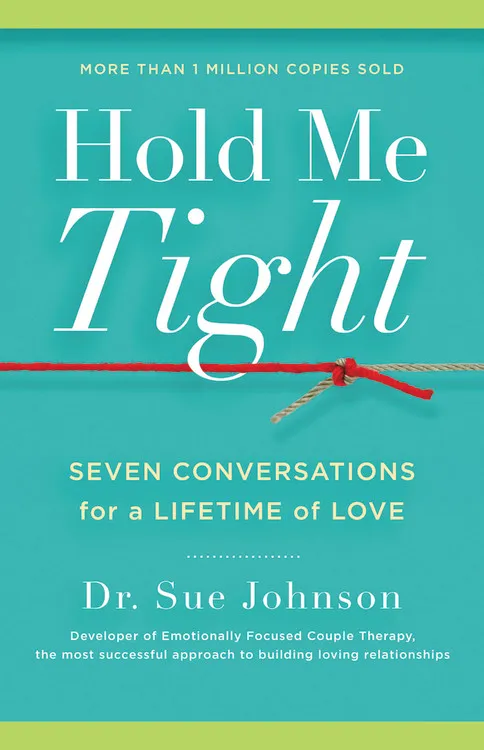
Hold Me Tight: Seven Conversations for a Lifetime of Love
by Dr. Sue Johnson
About the Author
Dr. Sue Johnson was a clinical psychologist, researcher, and the primary creator of Emotionally Focused Therapy (EFT) for couples. Her work showed how human attachment shapes adult love. Through her research, teaching, and counseling, she helped couples recognize the emotional habits that cause distress and taught them how to build safe, lasting bonds.
What Is This Book About?
Hold Me Tight explains adult love through attachment theory. Dr. Johnson argues that humans never outgrow the need for close connection. Wanting comfort from a partner is not childish or weak; having someone to rely on gives people a safe harbor when life gets hard and the courage to face daily challenges.
The book lays out seven guided conversations to help couples break bad fighting habits, understand the soft feelings hidden under anger, and rebuild closeness. It teaches partners how to spot recurring arguments, talk about their fears, heal old hurts, and protect their physical and emotional intimacy.
Who Might Benefit from This Book?
This book is for any couple wanting a stronger bond, whether they are fighting constantly or just want to feel closer. It is especially helpful for:
- Couples stuck in repetitive fights where one person complains and the other walks away or goes silent.
- Partners who feel distant and have trouble asking for comfort.
- People who want to understand why small comments suddenly trigger deep hurt.
- Couples who need a clear way to apologize, forgive, and rebuild trust.
- Counselors looking for practical ways to teach clients how attachment shapes love.
Couples dealing with physical abuse, threats, untreated addiction, or secret affairs will need direct professional help, as a self-help book is not safe or enough for those crises.
Key Ideas to Explore
Love as a Lifelong Need
Johnson pushes back on the idea that healthy adults should be totally independent. Adults need dependable emotional connection just as children do. Knowing someone has your back does not make you weak; it gives you the stability you need to thrive.
Negative Fighting Cycles
When a relationship struggles, the fight takes on a life of its own. In patterns like the “Protest Polka,” one person chases connection with complaints or anger, while the other pulls away to avoid trouble. Each person’s reaction feeds the other’s fear. Johnson teaches couples to treat the cycle as the real enemy instead of blaming each other.
Vulnerable Needs Beneath Defensive Walls
Anger, criticism, and stony silence are often shields. Underneath the surface, partners are usually feeling hurt, lonely, scared, or worried that they do not matter. Naming those deeper feelings helps couples talk about what is really going on instead of just firing back at each other.
The A.R.E. Rule for Safe Connection
Johnson explains emotional safety through three simple ideas: Accessibility, Responsiveness, and Engagement (A.R.E.). Partners need to know: Can I reach you? Will you respond when I call? Do I matter to you? The heart of the book is learning to share these needs clearly and answer them with kindness.
Repairing Injuries and Maintaining Closeness
Good relationships are not free of conflict; they are good at repairing disruptions. Johnson walks through how to heal deep betrayals, how emotional safety improves sex, and how staying close helps couples survive outside trauma and grief.
What I Appreciated About the Book
The names Johnson uses for common arguments—the “Demon Dialogues”—are easy to remember and use. Labels like “Find the Bad Guy,” “Protest Polka,” and “Freeze and Flee” help couples step back and look at the pattern without pointing fingers.
The concept of “raw spots” helps explain why little things blow up into huge arguments. Showing how a partner’s tone or distracted look can poke an old fear of being abandoned helps people respond with care instead of getting defensive.
Focusing on the cycle rather than the topic of the fight is another major strength. Couples often waste years arguing over chores or money, missing the panic beneath the words. Showing how criticism and silence trigger each other gives couples a practical way forward.
The book’s focus on repair over perfection is deeply encouraging. Staying together does not require avoiding all conflict. It comes down to whether partners are willing to turn back toward each other, take responsibility for their mistakes, and restore safety when things go wrong.
Things to Keep in Mind
Opening Up Requires Real Safety
These exercises ask people to drop their defenses and share their deepest fears. But doing that is dangerous if a partner is cruel, mocking, or completely unwilling to care. No one should feel pressured to be vulnerable if it only leads to more hurt.
Limits of the Self-Help Format
While the seven conversations are laid out clearly, reading about calm, structured talks on a page is very different from managing high-conflict arguments in real time. When couples have years of built-up hurt or severe past trauma, they often need a trained marriage therapist in the room to slow down heated moments and keep both partners safe.
Forgiveness Often Takes More Than One Conversation
The book outlines a clear path for apologizing and forgiving. But when trust has been badly broken, a single talk will rarely fix it. Rebuilding real safety takes consistent, changed behavior over months and years, and forgiveness cannot be rushed.
Why This Book May Be Helpful in Counseling
Hold Me Tight gives counselors a practical, clear guide to help couples look beneath surface arguments. Instead of teaching communication tricks that fall apart under stress, it addresses the attachment fears driving the conflict.
Therapists can assign individual conversations between sessions to help clients identify their chase-and-withdraw habits, name their sensitive spots, and practice asking for comfort in plain words. It gives counselors a proven tool for helping couples build safety, as long as the relationship is free of abuse and coercion.
Questions for Reflection
- In an argument, do you tend to chase and demand answers, or do you shut down and withdraw?
- What are your sensitive “raw spots” that make you feel suddenly dismissed or unloved?
- How well do you and your partner practice being accessible, responsive, and engaged?
- What soft feelings—like fear, sadness, or shame—hide under your anger during fights?
- What steps do you take to reconnect and repair after an argument ends?
- How does knowing that needing comfort is normal change how you see yourself and your partner?
A Final Thought
Conflict happens in every relationship, but it does not have to pull people apart. Lasting love comes from finding the courage to step out of defensive habits, share what we really need, and hold each other close when life gets hard.
Book Information
Title: Hold Me Tight: Seven Conversations for a Lifetime of Love
Author: Dr. Sue Johnson
Publisher: Little, Brown and Company
Publication year: 2008
APA Reference
Johnson, S. M. (2008). Hold me tight: Seven conversations for a lifetime of love. Little, Brown and Company.