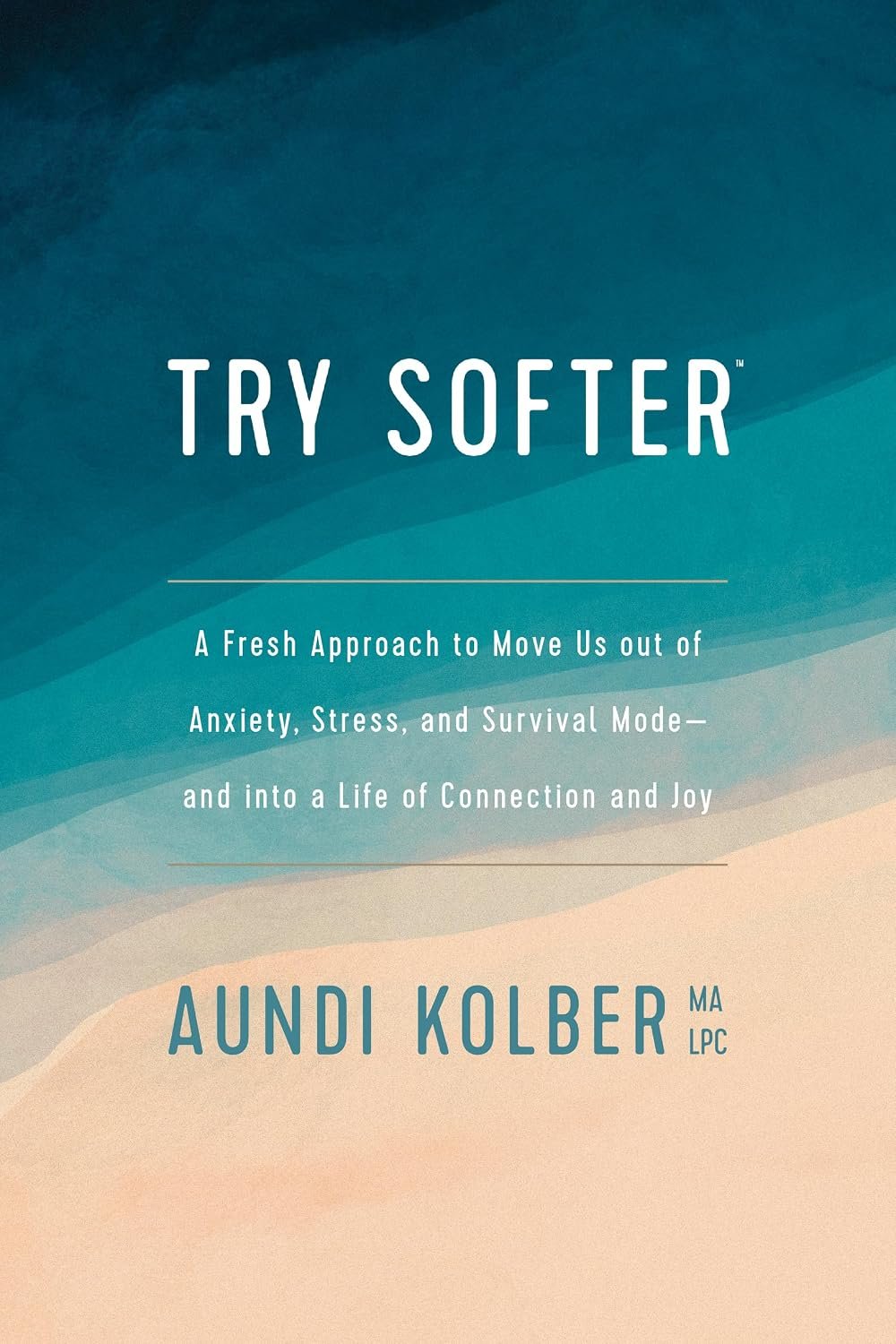
Try Softer
by Aundi Kolber, MA LPC
About the Author
Aundi Kolber is a Licensed Professional Counselor (LPC), author, and speaker based in Colorado. She earned her master’s degree in Community Counseling from Denver Seminary. Her work focuses on trauma, relationships, and therapies that help people understand the connection between their minds and bodies. Kolber is also a trauma survivor, and she combines her professional knowledge with her Christian faith.
What Is This Book About?
Have you ever pushed yourself to keep going even when you felt exhausted—believing you must continually “try harder”? Do you struggle to say no, worry about disappointing others, or feel guilty when you take care of yourself?
Try Softer offers another way to approach healing. Instead of pushing harder, criticizing yourself, or trying to force your way through difficult feelings, you can learn to respond to yourself with patience and care.
Past experiences, trauma, and painful relationships can affect how we respond to stress long after the original events have passed. You may find yourself trying to please everyone, avoiding conflict, staying busy, or feeling responsible for other people’s emotions. These responses may have helped you cope with difficult situations in the past, but they can become exhausting when they continue to shape your adult life.
Kolber connects these experiences to the ways our brains and bodies respond to stress. She encourages readers to notice physical signals, understand their emotions, set boundaries, and approach painful experiences at a manageable pace. Rather than treating the body as separate from spiritual life, the book presents caring for our physical and emotional needs as part of caring for the whole person.
For Christian readers, Try Softer also offers a way to think about healing through the belief that we are loved by God, even when we struggle. You do not have to earn that love by performing, pleasing others, or appearing strong.
Who Might Benefit from This Book?
This book may be helpful if you:
- Feel anxious, overwhelmed, or worn out from trying to keep up with life’s demands.
- Often put other people’s needs ahead of your own.
- Feel guilty when you say no or set limits.
- Have a history of trauma or painful relationships.
- Notice that your body reacts strongly to stress, even when you want to stay calm.
- Push yourself through exhaustion or ignore your own needs.
- Struggle with a harsh inner critic or feel ashamed when you make mistakes.
- Find it difficult to trust others or feel safe in relationships.
- Have been taught that strong faith means hiding emotional pain or simply praying it away.
- Want to understand how your body, emotions, relationships, and faith affect one another.
The book may be especially helpful for Christians who want to care for their mental health without feeling that doing so conflicts with their faith.
Key Ideas to Explore
Understanding Trauma and Survival Responses
Painful experiences can affect how people respond to stress and relationships. Some people react by becoming angry or pulling away. Others try to keep everyone happy to avoid conflict. Some shut down or feel numb.
These responses may have helped a person cope with difficult situations in the past. However, they can become patterns that cause problems later in life. Understanding these patterns can be a first step toward change.
Caring for Your Mind and Body
Kolber emphasizes that emotional and physical health are connected. Stress may show up as muscle tension, a racing heart, exhaustion, or other physical symptoms.
Rather than ignoring these signals, readers are encouraged to notice what their bodies may be telling them. Learning to recognize stress can help people respond to their needs with greater care.
Practicing Self-Compassion
Many people believe that being hard on themselves will help them improve. Kolber challenges this belief. She explains that shame and harsh self-criticism can make it harder to move forward.
People can take responsibility for their choices without treating themselves as failures. Self-compassion means recognizing that you are human, allowing room for mistakes, and choosing healthier ways to respond.
Setting Healthy Boundaries
It is possible to care about others without being responsible for everyone’s feelings or needs. Boundaries help people decide what they can reasonably give and what they need to protect their well-being.
For people who have spent years trying to please others, setting boundaries may feel uncomfortable. Kolber encourages readers to practice listening to their needs and making changes at a manageable pace.
Finding Safety and Support
Healing does not have to happen all at once, and people do not have to manage everything alone. Safe relationships, supportive communities, and professional counseling can help people work through difficult experiences.
Kolber also explores how faith can offer comfort and help readers understand themselves as loved by God, even when they are struggling.
What I Appreciated About the Book
The connection between people-pleasing and survival responses is especially useful. When someone has learned to keep others happy to avoid conflict or rejection, that pattern may continue long after the original situation has changed. Understanding this response can replace some of the shame with curiosity about what the person learned to do to stay safe.
I also value the emphasis on pacing. When people have experienced trauma, being pushed to face painful memories or feelings before they feel ready can be overwhelming. Taking small steps and returning to something calming can make room for difficult emotions without demanding that a person push through them all at once.
The book’s view of the body is another strength. Physical signs of stress deserve attention rather than dismissal. Emotional pain is not less real because it shows up as tension, exhaustion, a racing heart, or numbness. For Christians who have been taught to rely on prayer alone, this perspective can help them understand that seeking psychological care and tending to physical needs do not have to conflict with faith.
Finally, the message that shame is not an effective path to change is important. People who already feel inadequate rarely benefit from being told to try harder or criticize themselves more. Compassion does not remove responsibility; it can help people face their struggles with greater honesty and a clearer sense of what they need.
Things to Keep in Mind
Although I found much to appreciate in this book, there are a few important points readers should consider.
Family Relationships Do Not Always Heal
Kolber shares a moving story about rebuilding her relationship with her mother after a long period of sobriety and healing. This story offers hope, but not every family relationship can be repaired.
Some family members may never acknowledge the harm they caused, seek help, or apologize. Readers in these situations may need support as they grieve what they did not receive. Healing does not require reconciliation with someone who continues to cause harm.
Setting Boundaries Can Be Difficult
Suggestions such as politely declining a request can be useful in relationships where the other person respects your choices. But boundaries can be more difficult in controlling families, harmful workplaces, or religious communities where disagreement may lead to punishment, isolation, or loss of income.
If setting a boundary could put your safety, housing, job, or important relationships at risk, you may need a different plan. Support from a trusted person or counselor can help you consider your options and decide what is safest for your circumstances.
You do not have to use a particular phrase or confront someone directly to prove that you have healthy boundaries.
Healing Does Not Have to Be Done Alone
Kolber offers several tools for managing difficult emotions, such as noticing body sensations and practicing self-compassion. However, people with deep or long-lasting trauma may find these practices difficult to use on their own.
Support from trusted people, safe communities, and trained mental health professionals can be an important part of healing. Asking for help is not a failure.
Why This Book May Be Helpful in Counseling
Try Softer can help readers begin to understand how past experiences affect their present lives. It may be especially useful for people who struggle with anxiety, burnout, people-pleasing, or painful relationships.
The book also offers counselors a way to discuss trauma and emotional health with clients whose Christian faith is important to them. By connecting mental health ideas with faith, Kolber challenges the belief that emotional struggles are signs of spiritual weakness.
The book is best viewed as a starting point for reflection and learning. It does not replace professional counseling or other care that a person may need.
Questions for Reflection
As you read, consider the following questions:
- When do I feel pressure to keep going, even when I need rest?
- Do I often put other people’s needs before my own? Why might that be?
- What makes it difficult for me to say no or set boundaries?
- How do I respond to myself when I make a mistake?
- What physical signs do I notice when I feel stressed or overwhelmed?
- Who helps me feel safe, accepted, and understood?
- What is one small step I could take toward caring for myself this week?
You do not have to answer every question at once. Choose the ones that feel most useful to you.
A Final Thought
You do not have to push yourself harder to deserve love, care, or support. Learning to understand your emotions, respect your limits, and ask for help can take time.
Being gentle with yourself does not mean giving up. It means finding a healthier way to move forward.
Book Information
Title: Try Softer: A Fresh Approach to Move Us Out of Anxiety, Stress, and Survival Mode—and Into a Life of Connection and Joy
Author: Aundi Kolber
Publisher: Tyndale Momentum
Publication year: 2020
APA Reference
Kolber, A. (2020). Try softer: A fresh approach to move us out of anxiety, stress, and survival mode—and into a life of connection and joy. Tyndale Momentum.