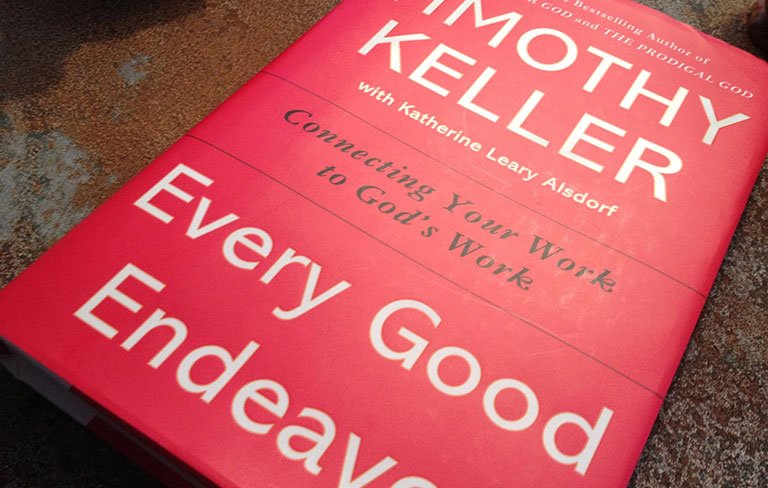
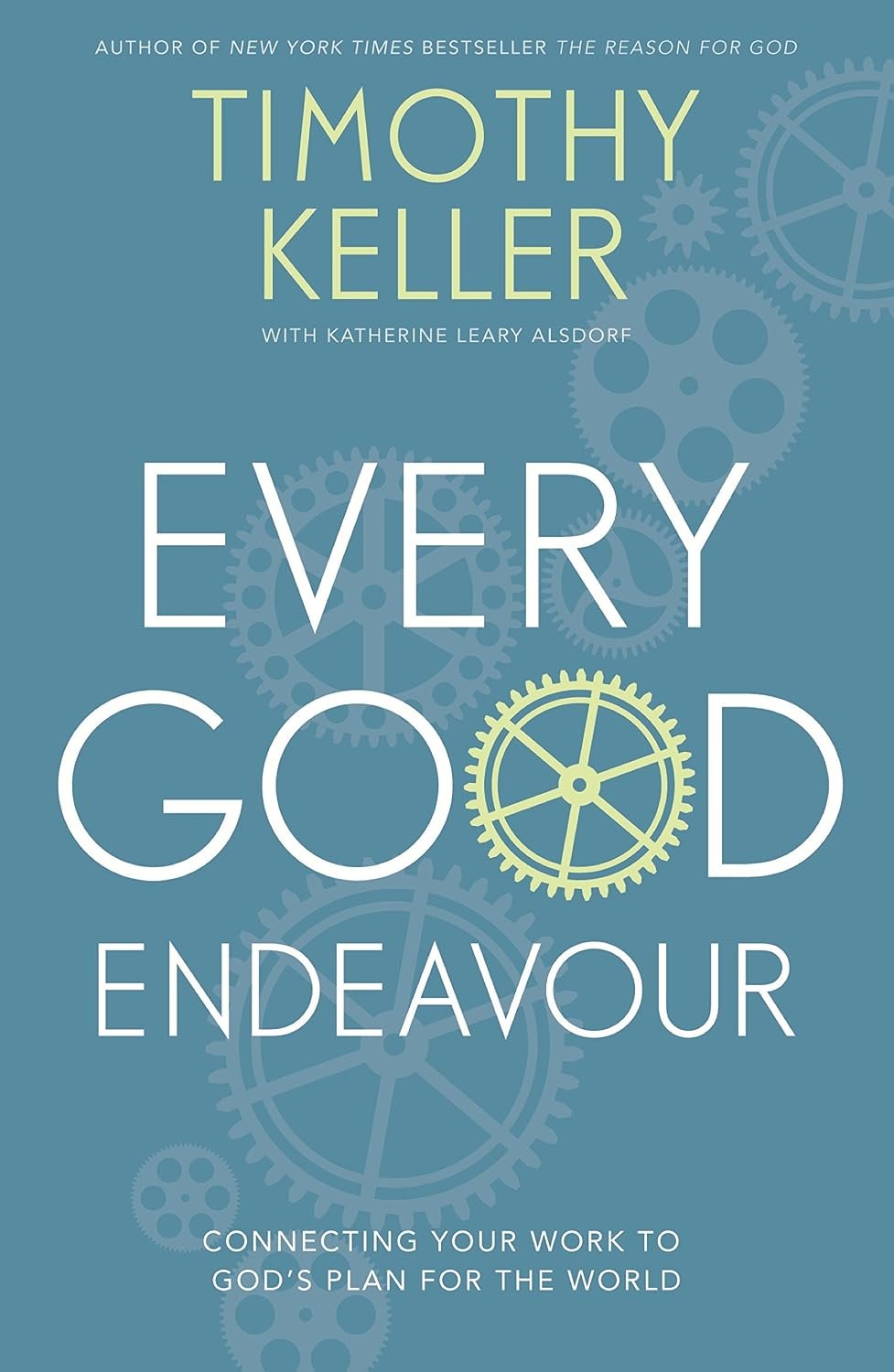
Every Good Endeavor
by Timothy Keller, with Katherine Leary Alsdorf
About the Authors
Timothy Keller (1950–2023) was a pastor, theologian, author, and church planter. He founded Redeemer Presbyterian Church in New York City and served as its senior pastor from 1989 to 2017. His writing often explored how Christian beliefs connect with everyday life and modern culture.
Katherine Leary Alsdorf is a leader in the faith-and-work movement. She founded and served as executive director of the Center for Faith & Work at Redeemer Presbyterian Church. Her work helps people explore how their beliefs can shape their choices, relationships, and daily work.
Together, Keller and Alsdorf explore how people can find meaning and purpose in their work through a Christian understanding of life and faith.
What Is This Book About?
Work can give us purpose and opportunities to serve others, but it can also become the measure of our worth. When career success brings approval and a setback feels like personal failure, work may be carrying more emotional weight than it can bear.
In Every Good Endeavor, Keller and Alsdorf explore work through a Christian perspective. They consider why people work, why work can be frustrating, and how faith can shape the way people approach their jobs. They describe work as a calling to serve God and others, not simply a source of income, status, or personal fulfillment.
The authors also recognize that meaningful work is not always satisfying. Conflict, disappointment, and difficult working conditions do not necessarily mean someone has chosen the wrong career. Their message is that Christians can pursue excellence and contribute to others without making professional achievement the foundation of their identity.
Who Might Benefit from This Book?
Every Good Endeavor may be helpful for people who:
- Feel uncertain about their career path or calling.
- Want their work to have more meaning and purpose.
- Feel pressure to succeed or prove their worth through achievement.
- Struggle with perfectionism or work-related anxiety.
- Feel burned out or disappointed with their job.
- Are considering a career change or entering a new stage of life.
- Want to connect their Christian faith with their daily work.
This book may be especially meaningful for professionals, business owners, educators, ministry leaders, students, and others who want to think more deeply about the purpose of their work.
Key Ideas to Explore
Work Can Be a Calling, Not Just a Job
Keller explains that work can be a way to use our abilities to serve God and other people. Work is not limited to church jobs or careers that seem especially important. Everyday tasks can also help meet people’s needs and contribute to the good of a community.
This idea can help readers see value in their work, even when it feels ordinary or goes unnoticed.Keller explains that work can be a way to use our abilities to serve God and other people. Work is not limited to church jobs or careers that seem especially important. Everyday tasks can also help meet people’s needs and contribute to the good of a community.
This idea can help readers see value in their work, even when it feels ordinary or goes unnoticed.
All Honest Work Has Value
People often judge jobs by income, status, or how much recognition they bring. Keller challenges readers to look beyond these measures.
Many kinds of work help others and keep communities going. Teaching, caregiving, building, cleaning, managing a business, and providing health care can all make meaningful contributions.
The value of work is not based only on a person’s title or paycheck.
Work Can Be Both Meaningful and Difficult
Work can be good and worthwhile while still being frustrating. People may face unfair treatment, difficult coworkers, disappointment, or tasks that seem to lead nowhere.
Keller draws on the biblical story of humanity’s broken relationship with the world to explain why work does not always go as planned. When work becomes difficult, it does not automatically mean someone has chosen the wrong career.
Learning to accept the limits of work can help people respond to challenges without assuming they have failed.
Your Job Does Not Define Your Worth
It is easy to connect our identity to what we do. A promotion may make us feel successful, while losing a job or making a mistake may leave us feeling worthless.
Keller argues that people need a source of identity deeper than their work. From a Christian perspective, a person’s worth is grounded in God’s love rather than career success.
This idea may help readers pursue excellence without expecting work to prove that they are valuable.
Work Can Be a Way to Serve Others
The book encourages readers to ask how their work helps other people. Instead of focusing only on personal success, readers can consider how their skills and efforts meet needs in the world.
For Christian readers, this means seeing daily work as one way to live out their faith. How we treat coworkers, serve customers, solve problems, and carry out responsibilities can reflect our values.
What I Appreciated About the Book
The book offers a helpful challenge to performance-based identity. When people rely on career success for their sense of worth, setbacks can feel like personal failures, and accomplishments may never feel sufficient. Keller’s Christian perspective offers an alternative: believers can pursue excellence without making achievement the measure of their value.
I also appreciated the dignity the authors give to ordinary work. Their understanding of Christian witness extends beyond verbal evangelism to include integrity, competence, character, and service. This broadens the ways readers can understand their contribution to others.
Things to Keep in Mind
Although this book offers a thoughtful Christian view of work, there are a few areas readers may want to consider—
Finding Your Calling Can Take Time
The authors discuss work as a calling, but readers may still wonder how to recognize when it is time for a change. Interests, abilities, responsibilities, and life circumstances can shift over time.
More practical guidance on choosing a career, changing direction, or understanding how a person’s calling may develop through different stages of life would have been helpful.
It is okay not to have every answer about your career right now. Exploring different options can be part of the process.
Personal Interests and Strengths Matter
The book warns against making personal fulfillment the main goal of work. However, enjoying certain activities, understanding your strengths, and finding a job that fits your needs can also be important when choosing a career.
Serving others does not mean ignoring your own well-being. A healthy career decision can consider both the needs of others and what allows you to work in a sustainable and meaningful way.
Faith at Work Can Look Different for Different People
Keller explains how Christian beliefs can shape work and relationships in the workplace. However, some readers may want more practical examples of how to talk about their faith at work or how to respond when coworkers have different beliefs.
Readers from other religious backgrounds, or those who do not identify with a faith tradition, may also find that some of the book’s main ideas are less relevant to their own beliefs. The book is most directly suited to readers who want to explore work through a Christian perspective.
Not Every Work Problem Can Be Solved by Changing Your Attitude
A person’s experience at work is affected by more than their outlook. Low pay, unsafe conditions, discrimination, unfair treatment, and excessive demands can all affect well-being.
Finding meaning in work does not mean accepting harmful conditions. Sometimes a person may need practical support, workplace changes, or a different job.
Why This Book May Be Helpful in Counseling
Every Good Endeavor may be useful for clients who are struggling with career decisions, work-related stress, perfectionism, burnout, or questions about their identity and purpose.
Some people feel that they are only as valuable as their achievements. Others struggle when their jobs do not match their expectations or when they are unsure what direction to take next.
The book offers a Christian way to explore these concerns by helping readers consider what gives their lives meaning beyond work. It may also help clients think about how their values, relationships, abilities, and faith can guide career decisions.
For counselors working with Christian clients, the book can provide a starting point for conversations about work, identity, purpose, and personal values. It is not a career assessment or a substitute for practical career guidance, but it can support reflection about what a meaningful working life might look like.
Questions for Reflection
As you read, consider these questions:
- What does having meaningful work mean to me?
- How much of my sense of worth comes from my job or achievements?
- What skills, interests, or strengths would I like to use more often?
- How does my work help other people or contribute to my community?
- What parts of my work bring satisfaction, and what parts leave me feeling drained?
- When work becomes difficult, do I assume I have failed or chosen the wrong path?
- What values do I want to guide my career decisions?
- What is one small step I could take toward a healthier relationship with work?
You do not need to answer every question at once. Choose the ones that feel most useful to you.
A Final Thought
Your job is one part of your life, but it does not determine your worth. Work can be a place to use your abilities, help others, and live out your values. It can also be difficult, disappointing, and imperfect.
You do not have to achieve more than everyone else to live a meaningful life. You can begin by asking what matters to you, how you want to treat others, and what kind of contribution you hope to make.
Book Information
Title: Every Good Endeavor: Connecting Your Work to God’s Work
Authors: Timothy Keller and Katherine Leary Alsdorf
Publisher: Dutton
Publication year: 2012
APA Reference
Keller, T., & Alsdorf, K. L. (2012). Every good endeavor: Connecting your work to God’s work. Dutton.