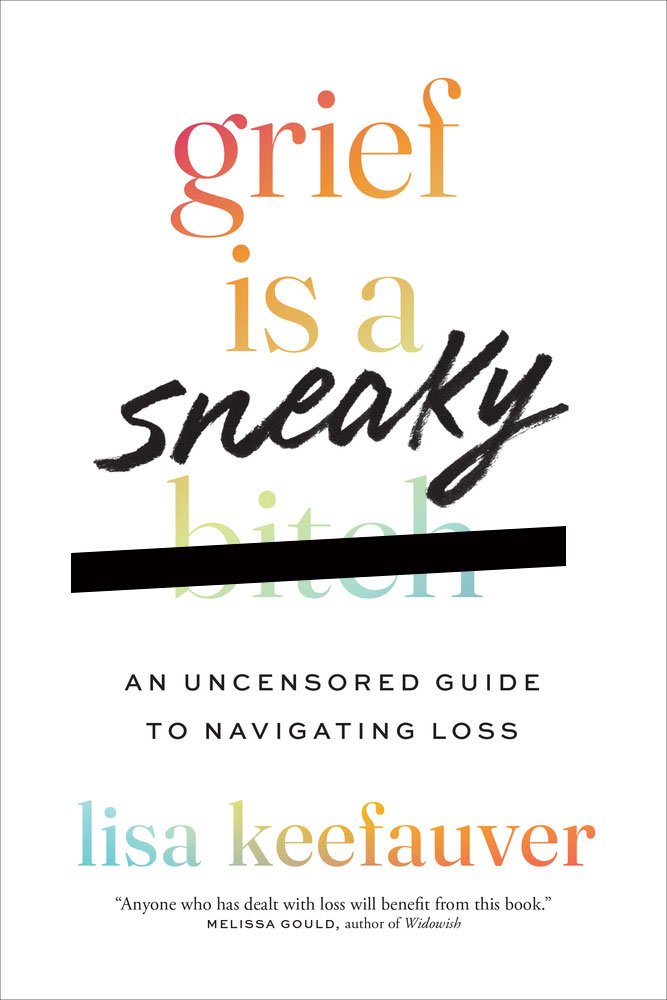
Grief is a Sneaky B*t¢h
by Lisa Keefauver
About the Author
Lisa Keefauver is a grief activist, writer, speaker, social worker, and therapist. After her husband, Eric, died from a brain tumor in 2011, she used both her personal loss and her background as a counselor to help others understand grief with more kindness. She started the organization Reimagining Grief and hosts a podcast called Grief Is a Sneaky B*t¢h. Through her talks, online programs, and writing, she works to help people carry their pain without feeling ashamed or broken.
What Is This Book About?
Grief Is a Sneaky B*t¢h is “an uncensored guide to navigating loss.” It pushes back against the cultural pressure to get over loss quickly, hide painful feelings, and return to normal. Keefauver explains that society often forces harmful rules onto people in pain. These unspoken rules tell people to stay strong, stop crying, or move on within a few months, which only causes more hurt. Her goal is to break down these false expectations so readers can treat themselves with patience and care.
The book shows that grief is about more than just death. People also grieve when they lose their health, their jobs, their relationships, or their plans for the future. Keefauver explains that loss hurts the whole person, causing physical exhaustion, heavy brain fog, and wild mood swings. By sharing personal stories and practical coping tools, the book gives readers a flexible guide to help them carry their loss while slowly building a meaningful life.
Who Might Benefit from This Book?
This book is written for anyone dealing with a death or a major life change, as well as friends, family, and counselors who want to support them. It is especially helpful for:
- People who feel guilty or confused because their grief does not fit into tidy stages.
- People dealing with hidden losses that others do not notice, like divorce, sickness, job loss, or caring for someone with memory loss.
- Grievers who had a hard, painful, or abusive relationship with the person who died and feel pressured to pretend the person was perfect.
- Anyone dealing with extreme tiredness, bad memory, and trouble making simple decisions after a loss.
- Counselors looking for short, simple chapters to help clients talk about their grief habits and feelings.
A note on language: Obviously, the book uses a lot of curse words and crude humor to push back against polite rules about grief. Readers who dislike strong language or feel it goes against their personal beliefs may not enjoy reading it. Also, people dealing with severe trauma will need direct help from a doctor or therapist rather than just a self-help book.
Key Ideas to Explore
Harmful Rules About Grief
Keefauver explains that grief is shaped by the silent rules society teaches us. Thinking we must always look tough, get over our pain in a year, or show only polite sadness makes loss much harder to bear. The book urges readers to spot these unfair rules and stop treating them like facts.
Grief Beyond Death
The author explains that people grieve many things besides physical death. She covers ambiguous loss, which happens when a loved one is alive but slipping away due to dementia or addiction. She also covers hidden losses that society ignores, as well as secondary losses—like losing money, home, friends, or daily routines after a crisis.
The Toll on the Body and Mind
Loss impacts every area of a person’s life, not just their emotions. Keefauver explains that adapting to loss requires enormous physical, mental, and practical effort. Managing everyday responsibilities while handling intense exhaustion, sleep troubles, and sudden mood shifts makes grief feel like an exhausting, unpaid full-time job. Rather than treating these struggles as personal shortcomings, she shows that they are normal reactions to an overwhelming life event.
Trouble with Friends and Family
Grief happens out in the open, and other people can either help or make things worse. The book talks about how much it hurts when friends give bad advice or say thoughtless things. It reminds readers that setting clear boundaries and protecting their energy is a necessary part of coping with pain.
Living With Loss Instead of Closure
The book rejects the idea of “closure” or the cliché that everything happens for a reason. Keefauver argues that healing does not mean forgetting the past or cutting ties with who was lost. Instead, grief becomes a lasting part of a person’s life story, while still leaving room for new joy, friendships, and hope.
What I Appreciated About the Book
The short chapters are a great choice for readers who are exhausted from carrying deep sadness. Readers can pick up one quick topic at a time without feeling overwhelmed by pages and pages of text.
Each chapter ends with a more practical application section, called “AN INVITATION FOR YOU.” These closing sections give readers simple breathing steps, journaling prompts, and guided exercises to help them slowly build a meaningful life alongside their grief.
The explanation of “grief brain” validates the experience of so many people. Connecting symptoms of mental fog and memory issues to brain research helps readers see that their struggles are normal. It reassures grieving people that they are not losing their minds.
The author also encourages honesty concerning difficult or complex relationships. When a person who died was abusive, cruel, or absent, survivors shouldn’t be forced to act in a certain way. In fact, doing so can be deeply hurtful. Keefauver gives people permission to be honest about complicated relationships without needing to make the person look like a saint.
The emphasis on releasing stress through the body rather than just the mind is especially helpful. The book rightly shows that you cannot simply reason your way out of physical distress. To complete the stress cycle, our bodies need physical releases—such as crying, muscle relaxation exercises, and extended exhales—to signal biological safety to the nervous system.
Finally, using the improv rule of “yes, and” gives people a handy tool for ambiguous or mixed feelings. Keefauver shows that grieving people do not have to choose between only feeling sorrow or only feeling joy. Practicing “yes, and” gives people permission to feel deep sadness and lighthearted relief at the exact same time. Holding both truths together helps remove the guilt that so often creeps in after an unexpected moment of laughter or ease.
Things to Keep in Mind
Although I found much to appreciate in this book, there are a few important points readers should consider.
Heavy Profanity Can Push Readers Away
Keefauver explains that she uses the curse word in the title on purpose to challenge polite rules about grief. But the constant swearing throughout the book can easily turn off readers who find bad language offensive or contrary to their values. The crude tone can sometimes distract from her good advice.
Beware the Dated Pop-Culture Jokes
The book relies heavily on references to old TV shows and movies like Mork & Mindy, Arrested Development, and Harry Potter. These references often feel forced, and they can make the book feel dated while taking away from the seriousness of deep pain.
Pushing Back Against Medical Diagnoses
Keefauver expresses clear distrust toward official terms like Prolonged Grief Disorder. While it is good to protect people from being labeled as broken, medical terms help doctors and therapists spot people whose deep grief has left them unable to care for themselves.
Why This Book May Be Helpful in Counseling
Grief Is a Sneaky B*t¢h works as a simple, easy-to-read book that explains brain stress and grief in plain language. It encourages counselors to stop using rigid stage models that make clients feel like they are grieving the wrong way.
Therapists can assign single chapters to start talks about hidden losses, thoughtless friends, and unfair expectations. The practical “AN INVITATION FOR YOU” exercises at the end of each chapter give counselors built-in homework tools for clients to practice calming their nervous system or journaling about their needs between sessions. While it cannot take the place of clinical trauma treatment, it offers a solid starting point for honest talk.
Questions for Reflection
As you read, consider the following questions:
- What expectations about how fast/slow you “should” heal have caused you extra stress?
- How has physical stress or mental fog showed up in your body and daily routines since experiencing your loss?
- In what ways have secondary losses—like changes in daily routines, income, or friendships—made your overall grief harder to carry?
- How can using “yes, and” help you make room for both sadness and happy moments without feeling guilty?
- Who in your life is safe to talk to, and where do you need to put up boundaries against bad advice?
- What does it look like to carry your loss forward as part of your life story instead of trying to erase it?
- Which of the “AN INVITATION FOR YOU” practices—like deep breathing or muscle relaxation—brought the most physical calm to your body?
You do not have to answer every question at once. Choose the ones that feel most useful to you.
A Final Thought
Grief is not a math problem to solve or a checklist to finish; it is a whole-person reaction to a world that has completely changed. When we stop trying to follow rigid rules and allow ourselves to carry both pain and hope, we make room for real healing that honors the past while stepping forward into life.
Book Information
Title: Grief Is a Sneaky B*t¢h: An Uncensored Guide to Navigating Loss
Author: Lisa Keefauver
Publisher: University of Texas Press
Publication year: 2024
APA Reference
Keefauver, L. (2024). Grief is a sneaky bitch: An uncensored guide to navigating loss (1st ed.). University of Texas Press.