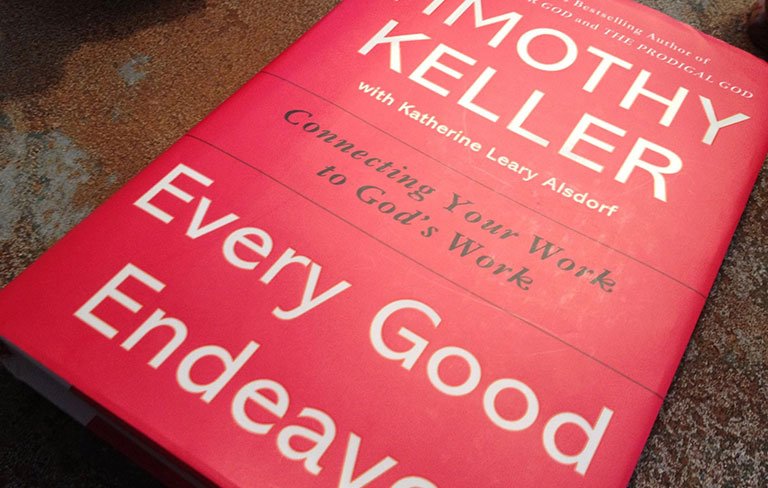
by Timothy Keller, with Katherine Leary Alsdorf
Book Review #11
Keller, T., & Alsdorf, K. L. (2012). Every good endeavor: Connecting your work to God’s work. Dutton.
Timothy Keller (1950–2023) has been a popular pastor, theologian, author, and church planter. He passed away recently, in 2023, and was widely applauded for his ability to connect Christian theology to contemporary culture. He was the senior pastor and founder of Redeemer Presbyterian Church in New York City, serving from 1989 through 2017.
Katherine Leary Alsdorf is a senior advisory board member for the Global Faith and Work Initiative. She served as the founder and former executive director of the Center for Faith & Work at Redeemer Presbyterian Church, where Keller was senior pastor.
Purpose and Audience:
Every Good Endeavor is primarily written for those from a Christian worldview who are seeking to understand the relationship between their work and their faith (i.e., “connecting your work and God’s work”). More than a means of income or achieving personal fulfillment, work is a God-given vocation through which individuals serve both God and their neighbor. The book addresses professionals, business leaders, educators, artists, laborers, students, and ministry workers who desire a biblical framework for understanding vocation. Keller’s main idea throughout the book is that the gospel transforms both the purpose and practice of work by providing meaning, identity, hope, and a vision for serving others through one’s labor.
Identification of key themes or ideas:
The book is organized around three central questions:
- How can the gospel transform work? (Unit 3)
- Why do we want to work? (Unit 1)
- Why is work so difficult? (Unit 2)
Through biblical, theological, and practical reflection, Keller seeks to help readers develop a Christian understanding of vocation, meaning, identity, and service in the workplace.
Key Themes
- Work as a Calling Rather Than a Job – Keller argues that vocation is fundamentally a calling from God. Work is not simply a means of financial support but an avenue through which people serve God and their neighbors (Chapters 1 & 4).
- The Dignity of All Work – Every legitimate occupation possesses dignity because all work participates in God’s creative and providential care for the world. This includes professional, technical, manual, and caregiving occupations (Chapter 2).
- The Effects of the Fall on Work – Although work was created good, sin has introduced futility, brokenness, frustration, and selfishness into every vocation. Using Genesis 3 and Ecclesiastes, Keller explains why work often disappoints despite its inherent goodness (Chapters 5-7).
- Identity and Work – One of the book’s central arguments is that people often seek identity, significance, and worth through their careers. Keller contends that only the gospel can provide a secure identity that frees individuals from both pride and despair.
- The Gospel’s Transformation (i.e., Redemption) of Work – Rather than viewing work primarily as a source of identity, security, status, or personal fulfillment, believers are called to see work as an opportunity to serve God and others. The gospel provides a new story for understanding work, a new definition of success rooted in faithfulness rather than achievement, and a new source of identity grounded in Christ rather than performance (Chapters 9, 11, & 12).
Points of interest and points of personal agreement and disagreement
Points of interest:
- The “work beneath the work” — Keller’s challenge to examine the deeper motivations driving our labor was especially thought-provoking. Rather than simply asking what people do for work, Keller asks what they are ultimately working for—approval, status, security, achievement, or God Himself. This insight helps explain why work can easily become an idol (Chapters 7 & 12).
- The “masks of God” concept — Keller’s use of Luther’s idea that God works through ordinary vocations was one of the most compelling themes in the book. Farmers, teachers, counselors, physicians, and laborers become instruments through which God provides for and cares for others (Chapter 4).
- The integration of faith and work — Keller effectively challenges the sacred-secular divide by arguing that Christian faith should shape every aspect of vocational life rather than being confined to church activities or explicitly religious work (Chapters 9 & 10).
- Common grace — The discussion of common grace provides a balanced framework for understanding how Christians can learn from, cooperate with, and appreciate the contributions of non-Christians while maintaining their own theological convictions (Chapter 10).
Points I agreed with:
- Work is a basic human need rather than merely a means of earning income. Keller’s argument that meaningful work is part of God’s design for human flourishing was persuasive and consistent with both Scripture and human experience (Chapter 1).
- Work becomes unhealthy when it becomes a source of identity or security. Keller’s discussion of idolatry in work helps explain why career success often fails to provide lasting satisfaction (Chapters 6 & 7).
- The gospel provides freedom from performance-based identity. Because worth is grounded in Christ rather than achievement, Christians can pursue excellence without making success their ultimate source of significance (Chapter 12).
- Christian witness extends beyond verbal evangelism. Keller’s emphasis on character, integrity, competence, excellence, and service broadens the understanding of how Christians influence others through their work (Chapters 9 & 10).
- Keller’s claim that frustration in work does not necessarily indicate vocational failure is especially helpful. The reality of “thorns and thistles” reminds readers that disappointment is part of living and working in a fallen world (Chapters 5 & 8).
Points of disagreement:
There wasn’t anything major that I really “disagreed with” in the book. There were a few things I had a differing opinion on.
- Keller does a great job exploring vocation and calling, but I would have appreciated more discussion about how people discern changes in vocation as they grow, mature, and move through different stages of life. He touches on some of these topics, but it is only briefly (Chapters 4 and 11).
- While Keller critiques self-fulfillment as a vocational goal, greater attention could have been given to the legitimate role of interests, giftedness, personality, and vocational fit in career selection (Chapters 4 and 11).
- Although Keller wisely warns against reducing work to evangelistic opportunities, the book could have given more attention to the role of intentional Christian witness within the workplace. The discussion of faith and work integration is strong, but actual evangelism in the workplace receives comparatively limited treatment (Chapters 9 & 10).
- Because Keller’s arguments are grounded in Christian theology, readers from other faith traditions or secular perspectives may find some of his central conclusions regarding vocation, identity, and work less persuasive or applicable.
Significance of the book to the counseling field:
Every Good Endeavor contributes to the field of counseling by addressing issues of identity, meaning, purpose, burnout, achievement, perfectionism, and vocational development. Many clients struggle with self-worth that is tied to occupational success or failure. Keller’s emphasis on identity grounded in something deeper than performance provides valuable insight for counselors working with anxiety, perfectionism, career concerns, and existential struggles. The book also encourages a holistic understanding of human flourishing that integrates spiritual, relational, and vocational aspects.
Critique of the overall work:
Overall, I am a fan of Tim Keller’s work. Every Good Endeavor is a thoughtful and well-developed theology of work that successfully integrates biblical teaching with practical vocational concerns. Keller combines theological depth, cultural analysis, and accessible writing in a way that is both intellectually engaging and spiritually meaningful. While some sections could benefit from additional practical guidance regarding career discernment and workplace complexities, the book remains one of the strongest Christian treatments of vocation available today. Its greatest strength is its ability to connect ordinary work to God’s larger redemptive purposes.
Usefulness of the book for potential clients
This book could be useful for Christian clients who are struggling with career indecision, vocational discernment, burnout, congruence vs. incongruence, perfectionism, work-related anxiety, identity and self-worth concerns, midlife career transitions, or questions about integrating faith and work. It may be particularly beneficial for professionals, ministry leaders, educators, business leaders, and others who are experiencing dissatisfaction or uncertainty about the purpose of their work. Because the book is grounded in a Christian worldview and contains significant theological reflection, it is best suited for clients interested in exploring vocational concerns from a Christian perspective rather than for those seeking a purely secular career-development resource.





Leave a Reply