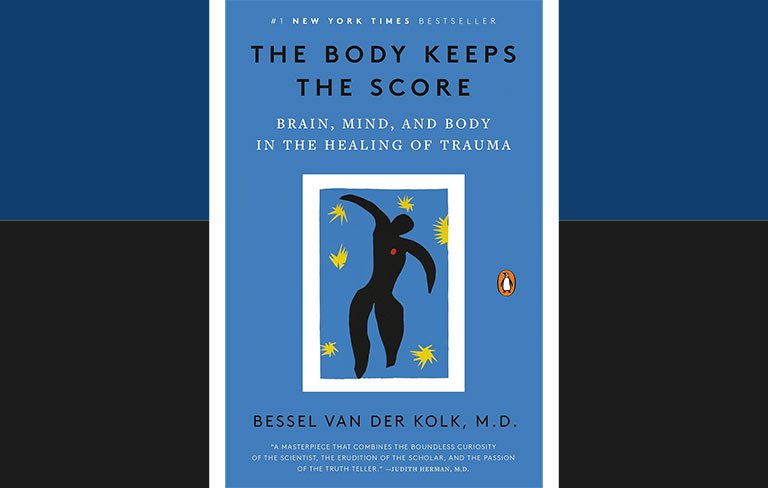
The Body Keeps the Score
by Bessel van der Kolk, M.D.
About the Author

Bessel van der Kolk is a psychiatrist, researcher, and author known for his work on trauma and its effects on the brain and body. He has spent more than four decades studying post-traumatic stress, childhood trauma, and approaches to treatment. He founded the Trauma Center in Brookline, Massachusetts, served as a professor of psychiatry at Boston University, and helped establish the National Child Traumatic Stress Network.
What Is This Book About?
The Body Keeps the Score explores the idea that trauma is not simply an emotional or psychological event. Instead, it is a whole-body experience that affects attention, memory, bodily regulation, and a person’s sense of identity. By drawing on neuroscience, developmental research, clinical case studies, and innovative treatments, the book demonstrates how traumatic stress alters the brain and physical systems of survivors.
Trauma leaves measurable imprints on the alarm systems of the brain, causing stress responses to remain active long after dangerous events have passed. Because these memories are often encoded in nonverbal, subcortical areas of the brain, traditional talk-based and cognitive therapies have clear limitations. Van der Kolk argues for a holistic treatment approach that combines bottom-up, body-based therapies with traditional counseling to help survivors re-establish a sense of physical safety, emotional balance, and relational connection.
Who Might Benefit from This Book?
This book may be helpful for people who:
- Want to understand how trauma affects the brain, body, emotions, and relationships.
- Have experienced childhood abuse, neglect, or other forms of developmental trauma.
- Struggle with emotional regulation, stress, or feeling safe in relationships.
- Want to understand why past experiences can continue to affect present behavior.
- Are interested in body-based approaches to trauma treatment.
- Are currently in therapy and want to learn more about trauma and recovery.
- Work in counseling, mental health, medicine, or other fields that support trauma survivors.
- Want to understand the research and clinical approaches behind trauma-informed care.
The book may be especially useful for motivated adults who are ready to explore how trauma affects their lives and are curious about different treatment approaches. Readers should be prepared for detailed clinical stories involving abuse, violence, combat, and other traumatic events.
Key Ideas to Explore
Understanding Trauma as a Whole-Body Experience
Trauma leaves a physical mark on the brain’s alarm systems, causing the body to stay on high alert to protect against future danger. These reactions—such as racing heartbeats, muscle tension, or emotional numbness—are biological survival reflexes rather than personal failures. Understanding this helps people view their physical symptoms with patience rather than self-blame.
Developmental Trauma and the Lasting Effects of Early Harm
Chronic childhood trauma can affect the developing brain and influence emotional regulation, attachment, identity, and stress responses throughout life. Van der Kolk explains how neglect, abuse, and disrupted relationships can affect a child’s sense of safety and contribute to patterns of hypervigilance or emotional disconnection.
His discussion of Adverse Childhood Experiences (ACEs) and the proposed diagnosis of Developmental Trauma Disorder highlights the lasting effects of early adversity. It also raises questions about how trauma-related difficulties are understood and classified within the mental health field.
The Limitations of Talk-Based Therapy
The parts of the brain that use words and logic can turn off during severe stress. Because painful memories are stored as physical sensations, simply talking about them does not always help. A person might understand their past in their head while their body still feels panicked.
Body-Based Approaches to Healing
Healing often requires working directly with breathing, movement, and physical signals. Methods like EMDR, yoga, brain training (neurofeedback), and parts work help calm the nervous system. These tools help survivors feel at home and safe in their own skin again.
Reclaiming Safety and Relational Connection
Healing is more than just getting rid of symptoms. It means learning to connect with yourself and other people without fear. True recovery takes repeated experiences of feeling safe, heard, and in control of your choices.
What I Appreciated About the Book
The explanation of how the body stores stress is clear and helpful. The real-life stories about soldiers, survivors of abuse, and people in severe accidents clearly show how trauma changes a person’s behavior and view of the world.
The section on childhood adversity is a major strength. The discussion of Adverse Childhood Experiences (ACEs) shows the serious harm caused by early neglect. Van der Kolk makes a strong case for a new diagnosis called Developmental Trauma Disorder. It was disappointing to learn that the American Psychiatric Association rejected this useful idea.
The critique of talk therapy addresses a real problem in mental health care. Forcing people to talk about their pain can bring back bad memories instead of resolving them. Highlighting body-focused tools like EMDR, yoga, and neurofeedback shows helpful options outside of traditional talk therapy.
Finally, the book’s focus on the relationship between counselor and client is vital. A calm, caring counselor helps soothe a client’s stressed nervous system. This creates the safety needed for deeper healing work.
Things to Keep in Mind
Although I found much to appreciate in this book, there are a few important points readers should consider.
Clinical Stories or Examples Can Be Heavy
The case studies are heavy and describe violence and abuse in detail. People in the middle of an active crisis or without a good support system may find these stories overwhelming.
Spiritual Needs Are Ignored
The book looks at healing almost entirely through a non-religious lens. It rarely mentions the faith and spiritual beliefs that many people rely on to heal. This leaves out an important part of caring for the whole person.
Secular and Unconventional Views
The book reflects a modern, progressive viewpoint that may clash with the beliefs of more traditional counselors. Outside of this book, van der Kolk has shown interest in controversial treatments like psychedelic drugs. While the book does not teach this, his outside views are worth keeping in mind
Lack of Practical Guidance
While the book touches on treatments like EMDR, yoga, and neurofeedback, it does not give clear, step-by-step explanations on what these look like. Clinicians will need outside training to learn the actual techniques.
Why This Book May Be Helpful in Counseling
The Body Keeps the Score serves as a valuable educational tool for counseling clients who want to understand the physical roots of their symptoms. Learning that panic, freezing, and hypervigilance are nervous system adaptations can ease self-criticism and help clients understand why somatic interventions are being used.
For counselors, the book provides a clear, research-backed framework for integrating talk therapy with body-based techniques, expressive arts, and nervous system regulation. It is best used as an educational foundation to support ongoing therapy, rather than a substitute for professional care.
Questions for Reflection
- What physical signs do I notice in my body when I feel stressed or upset?
- How have my childhood experiences shaped my ability to feel safe around others?
- Do I try to solve all my problems with logic while ignoring how my body feels?
- What simple physical habits, like slow breathing or walking, help me feel calm?
- How does being around a calm, caring person help me handle difficult feelings?
- How does my personal faith fit alongside the physical steps needed to heal?
A Final Thought
Trauma leaves deep marks on the mind and body, but those marks do not have to control your future. Healing happens when you listen to your body, rebuild safe relationships, and take small, steady steps toward feeling whole again.
Book Information
Title: The Body Keeps the Score: Brain, Mind, and Body in the Healing of Trauma
Author: Bessel van der Kolk, M.D.
Publisher: Penguin Books
Publication year: 2015
APA Reference
van der Kolk, B. A. (2015). The body keeps the score: Brain, mind, and body in the healing of trauma [eBook]. Penguin Books.