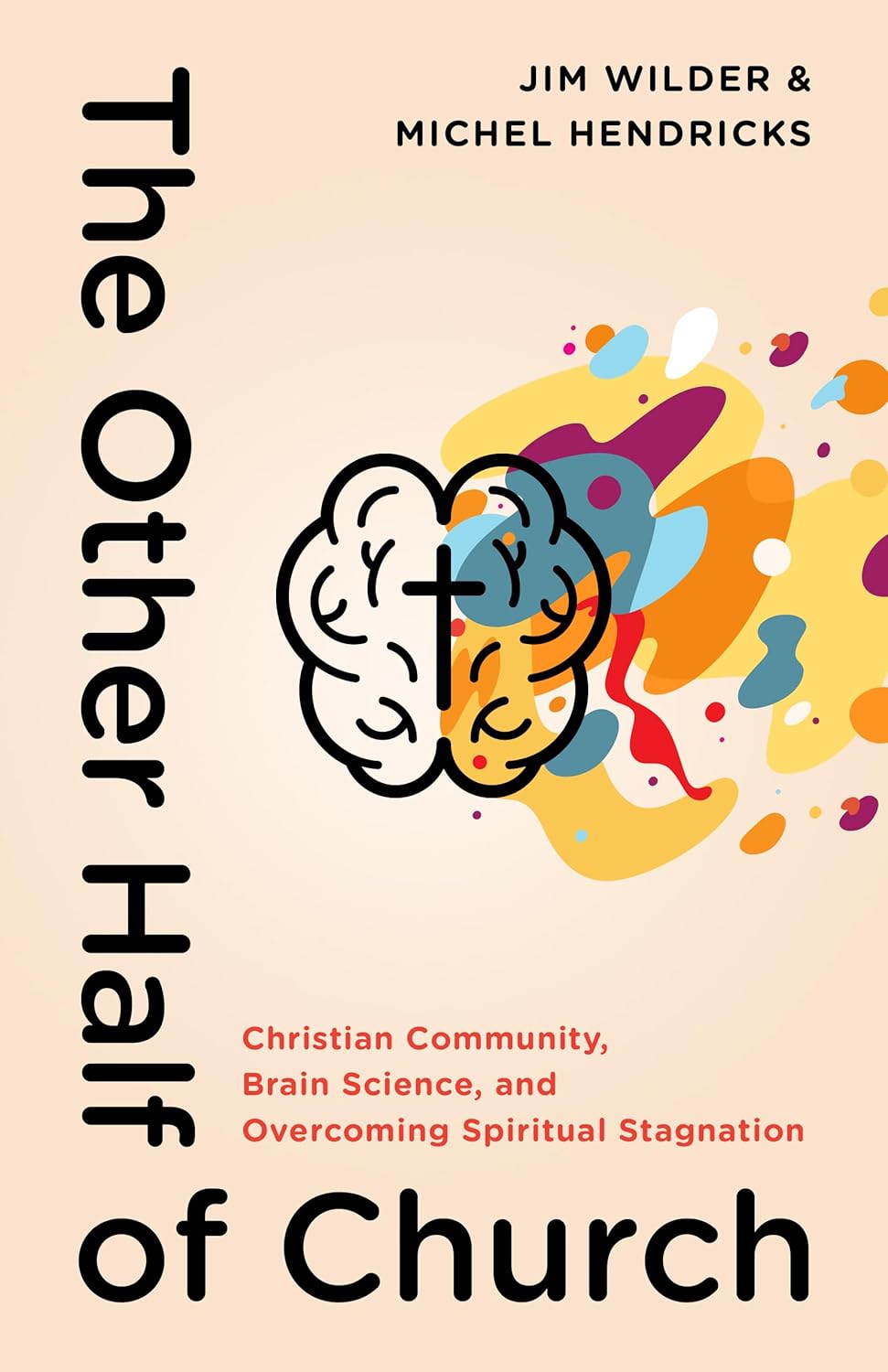
The Other Half of Church
by Michel Hendricks and Jim Wilder
About the Authors
Jim Wilder, Ph.D., is a clinical psychologist and theologian who describes his work as “neurotheology,” exploring how brain function, emotional maturity, and spiritual growth connect. He leads Life Model Works and has written nine books aimed at helping leaders mature and build strong communities.
Michel Hendricks is a pastor, teacher, and former missionary. While he has no formal degree in psychology or counseling, he completed extensive training through Wilder’s Life Model Works program and serves as the primary writer of the book. Together, they combine pastoral ministry with neurological insights.
What Is This Book About?
The Other Half of Church examines why traditional Christian discipleship often fails to produce lasting character change. The book argues that modern churches rely too heavily on “left-brain” methods—focusing on logic, theology, memorization, and behavioral instruction—while ignoring the relational “right-brain” ingredients needed for true transformation. Hendricks and Wilder explain that lasting growth requires emotional connection, communal joy, and a shared group identity.
Drawing on concepts from brain science, attachment theory, and biblical principles, the authors propose a model designed to engage the whole person. The text centers on four foundational ingredients: building relational joy, cultivating hesed (steadfast, loyal love), establishing a group identity that shapes character, and practicing restorative correction. Through personal stories from pastoral ministry and clinical explanations of brain pathways, the book presents a relational roadmap for overcoming spiritual stagnation in Christian communities.
Who Might Benefit from This Book?
This book may be helpful if you:
- Lead a church, small group, or ministry and want to build closer relationships in your community.
- Feel tired, bored, or disconnected in churches that focus only on sermons, lectures, and Bible facts.
- Want to know how brain science and emotions connect with Christian faith.
- Have a hard time making close, trusted friends at church.
- Want to move past just learning information and start experiencing real personal change.
- Lead a class or group and need practical ways to help people truly connect.
Key Ideas to Explore
A Whole-Brain Approach to Discipleship
Hendricks and Wilder argue that true discipleship requires engaging both hemispheres of the brain. While left-brain methods teach doctrine, rules, and theological concepts, the right brain processes relationships, emotional bonds, joy, and identity. A healthy church integrates both sides, balancing clear biblical instruction with relationally rich community life.
Joy as the Engine for Transformation
The authors define joy as the biological and emotional experience of knowing that someone is genuinely glad to be with you. In the brain, joy serves as the primary fuel for emotional health and spiritual endurance. When believers experience joy with God and with others, they develop the resilience needed to mature and navigate life’s hardships.
Hesed as Relational Glue
Drawing from the Hebrew Scriptures, the book highlights hesed—steadfast, enduring, covenant love—as the essential bond holding Christian communities together. True transformation requires belonging to a group where commitment is unconditional and members remain devoted to one another even during conflict or failure.
Group Identity and Character Formation
The authors explain that human behavior is heavily shaped by group belonging. People naturally conform to the culture of the community they identify with most deeply. Strong faith communities establish clear values by consistently reinforcing the message: “This is who we are, and this is how our family acts.”
Loving and Restorative Correction
Hendricks and Wilder propose that church discipline should be relational, public, and restorative rather than legalistic or punitive. They introduce the idea of “healthy shame”—feeling the pain of acting outside the family identity—as a tool to guide wandering members back into loving community rather than pushing them away.
Confronting Narcissism in Community
The book warns that narcissistic leadership and self-centered habits destroy Christian community. When leaders seek power, image management, or flattery over mutual joy, they erode trust and damage relational health across the entire congregation.
What I Appreciated About the Book
The book makes a compelling case that real spiritual transformation happens in relationally rich environments rather than through head knowledge alone. The authors offer a needed challenge to traditional discipleship models, rightly noting that memorizing facts and analyzing doctrine cannot replace deep emotional bonds and face-to-face community.
The physiological explanation of joy is another strong point. Linking joy to neurological development, facial attunement, and attachment to God provides a practical, biblically grounded picture of spiritual vitality. Experiencing God as someone who is genuinely glad to be with His children reframes faith away from mere duty into a life-giving relationship.
The discussion of hesed offers an inspiring vision for Christian fellowship. Grounding church life in steadfast, covenant love provides an antidote to consumer-driven church cultures where relationships are shallow and easily broken. Emphasizing unconditional commitment as the soil for spiritual growth is both biblical and clinically sound.
Finally, the authors’ analysis of narcissistic leadership addresses an urgent problem in contemporary ministry. Showing how unchecked narcissism destroys trust, silences accountability, and wounds church members equips congregations to recognize and reject harmful leadership patterns.
Things to Keep in Mind
The Harmful Risk of “Healthy Shame”
The authors’ attempt to rehabilitate shame by presenting a concept of “healthy shame” is deeply concerning. In practice, shame carries the toxic message: “Unless you change, you do not belong.” For survivors of trauma, emotional neglect, or spiritual abuse, shame is inherently damaging rather than restorative. Recommending public correction and shame-based interventions creates a high risk of enabling spiritually abusive environments.
Oversimplification of Theology and Brain Science
The book frequently uses brain science terminology to address deep theological and pastoral questions, often oversimplifying complex spiritual issues. Furthermore, its heavy emphasis on relational joy largely overlooks the role of grief, lament, suffering, and hardship in spiritual maturity.
Impractical and Risky Small-Group Models
The authors recommend replacing traditional age-based or interest-based small groups with mixed groups led by “mature” elders. While cross-generational mentorship is valuable, this structure risks concentrating unchecked authority in the hands of a favored few, creating fertile ground for favoritism or authoritarian control.
Dangers in Confronting Narcissistic Leaders
While identifying narcissism is helpful, the book’s suggestions for addressing narcissistic individuals within church settings are overly idealistic. In congregations that lack robust outside accountability or where members reflexively protect the pastor, confronting a narcissistic leader directly can be dangerous for vulnerable members.
Promotional Tone and Lack of Empirical Support
The book frequently promotes Wilder’s Life Model Works organization, giving parts of the text an infomercial quality that weakens its credibility. While the book borrows heavily from interpersonal neurobiology and attachment theory, it does not explicitly cite these research fields, leaving readers without direct empirical sources.
Why This Book May Be Helpful in Counseling
The Other Half of Church offers counselors working in faith-based contexts useful concepts for integrating relational neuroscience with spiritual formation. Therapists can draw upon the book’s explanations of joy, attachment, and community bonds to help clients heal from emotional isolation and develop healthier relational patterns within their churches.
However, the book must be used with significant caution. It is not suitable for clients with complex PTSD, severe trauma, or histories of religious trauma and spiritual abuse, as the sections on “healthy shame” and public correction can be deeply triggering. For clients without trauma histories who simply want to understand the role of joy and emotional attunement in their faith, the book provides accessible food for thought.
Questions for Reflection
- In what ways does your local church prioritize left-brain instruction (logic, doctrine, rules) over right-brain formation (joy, connection, identity)?
- Have you experienced joy as knowing God is genuinely glad to be with you, or has your faith felt primarily like an intellectual obligation?
- How does the presence of hesed (steadfast, loyal love) show up in your closest spiritual relationships?
- In what ways have shame-based approaches to correction caused harm in your past church experiences?
- How can church communities foster genuine cross-generational relationships without concentrating power in an unhealthy way?
- What practical steps can your small group take to focus on emotional attunement and mutual joy during weekly gatherings?
A Final Thought
Christian discipleship was never meant to be a purely intellectual exercise. While sound doctrine matters, God designed human hearts and brains to be transformed through steadfast love, authentic joy, and safe community. Becoming spiritually mature requires engaging the whole person—mind, body, and relationships.
Book Information
Title: The Other Half of Church: Christian Community, Brain Science, and Overcoming Spiritual Stagnation
Authors: Jim Wilder and Michel Hendricks
Publisher: Moody Publishers
Publication year: 2020
APA Reference
Wilder, J., & Hendricks, M. (2020). The other half of church: Christian community, brain science, and overcoming spiritual stagnation. Moody Publishers.